

The Iconic Alternative for Family Fashion: 2026 Guide
Table of Contents
- Why Families Are Reconsidering One-Stop Fashion Retailers
- How We Evaluated Family Fashion Alternatives
- Feature Comparison: Family Fashion Essentials at a Glance
- Best Online Clothing Stores for Families: What Actually Matters
- Affordable Family Fashion Brands Australia: Pricing Breakdown
- The Iconic Alternative for Family Fashion: A Curated Approach
- Building a Capsule Wardrobe for the Whole Family
- Sustainability Certifications and Ethical Production Checks
- Frequently Asked Questions
Last Updated: September 16, 2026
Why Families Are Reconsidering One-Stop Fashion Retailers
Buying for a whole household from one large retailer sounds efficient until you're three returns deep and still short a pair of school shorts. Family fashion is the practice of sourcing clothing for adults and children from a small number of trusted, curated sources rather than chasing every sale across a dozen storefronts.
How We Evaluated Family Fashion Alternatives
We scored every option on four criteria, weighted by what parents told us they care about: sizing range and age coverage first, then fabric durability, landed cost after shipping, and returns terms.
| Criterion | What We Measured | Why It Matters |
|---|---|---|
| Sizing range | Age and measurement spread per category | Fewer gaps means fewer split orders |
| Wash durability | Fabric behaviour across repeated cycles | Determines real cost per wear |
| Landed cost | Item price plus shipping minus returns | Reveals the true outlay |
| Returns terms | Window length, condition rules, refund speed | Protects you when sizing misses |
Feature Comparison: Family Fashion Essentials at a Glance
The table below compares family wardrobe essentials against where each is typically sourced. Treat it as a coverage checklist, not a shopping list.
| Category | Typical Sizing Spread | Durability Priority | Consolidation Value |
|---|---|---|---|
| Kids knitwear | 9-12M to 3T | High, frequent washing | High |
| Kids summer sets | 100 to 140 | Medium, seasonal | High |
| Boys activewear | 18-24M to 11-12Y | High, heavy play | Medium |
| Men's loungewear | S to XXXL | Medium, cooler months | Medium |
| Women's everyday wear | Varies widely by brand | High, daily rotation | High |
Best Online Clothing Stores for Families: What Actually Matters
What matters is not brand recognition but whether a store can dress every member of your household without three separate checkouts. Two factors decide that: sizing coverage and fabric durability.
Sizing Ranges and Age Coverage
A store covering toddler through tween in one place removes a category of admin. Sizing gaps are the biggest reason parents abandon a consolidated approach.
Fabric Durability Across Multiple Washes
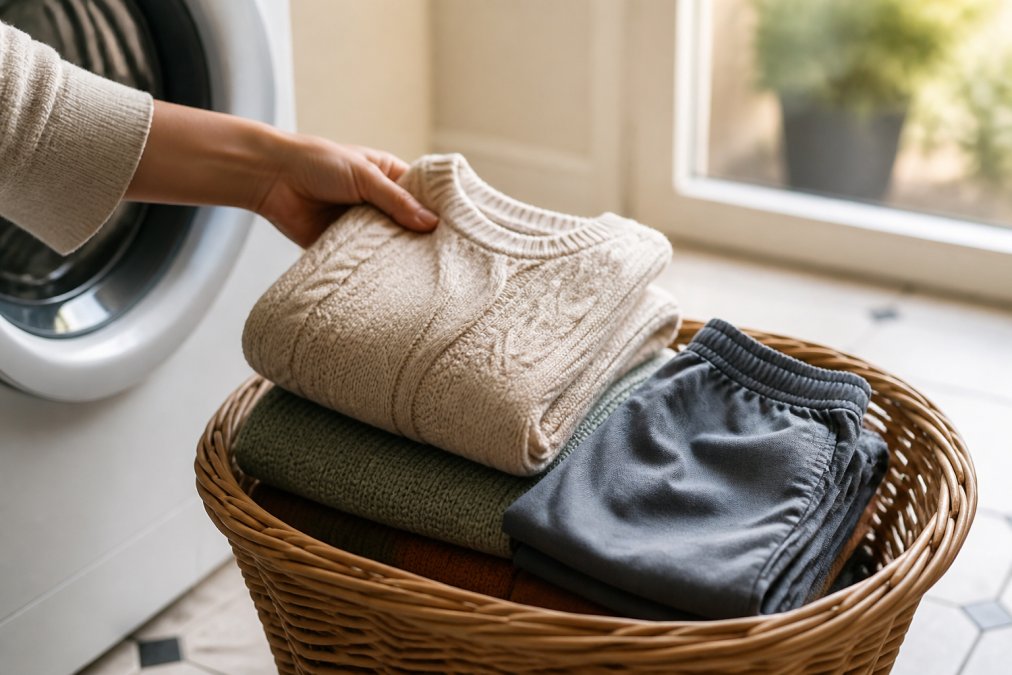
Durability is the difference between a garment that survives one season and one that survives three. Soft knit fabric and breathable cotton blends hold shape better than loose weaves after repeated warm washes.
- Check the fabric weight, not just the fibre name
- Prefer ribbed cuffs and hems, which resist stretching
- Avoid prints applied as thick surface layers on kids' activewear
- Wash knitwear inside out and cool to protect shape
Affordable Family Fashion Brands Australia: Pricing Breakdown
Affordability in family fashion is a function of cost per wear, not sticker price. A $30 item worn forty times costs less per wear than a $15 item worn ten times.
Cost Per Wear vs Upfront Price
Cost per wear is the purchase price divided by the number of times the item is actually worn. It's the only figure that makes two garments genuinely comparable.
Shipping Thresholds and Return Policies
Shipping and returns decide whether a consolidated order actually saves money. According to the ACCC's guidance on online shopping and refunds, return rights depend on whether a fault exists, so a change-of-mind return is a policy matter, not a legal entitlement.
- The threshold at which shipping becomes free
- Whether returns are free or charged back to you
- How long the return window runs from delivery
The Iconic Alternative for Family Fashion: A Curated Approach
A curated approach means stocking fewer, better-vetted pieces across every category your household needs, rather than filtering an enormous catalogue yourself. The Iconic alternative for family fashion is a smaller, deliberately assembled range where each item is checked for fit, fabric and everyday wearability.
Building a Capsule Wardrobe for the Whole Family
A family capsule wardrobe is a small set of interchangeable everyday pieces, chosen so any top works with any bottom, sized for each household member. The goal is fewer decisions on school mornings, and fewer mid-season replacements when someone grows overnight.
The Family Capsule Math
Start with the pieces that get worn most, then build outward. A workable starting point for most households:
- 7-10 everyday items per child (tops, bottoms, one outer layer)
- 10-15 everyday items per adult
- 2-3 sets of sleepwear per person
- 1 activewear set per active child
- 1-2 smarter outfits per person for events
Designing for Growth Spurts, Not Against Them
Buying a size up to 'grow into' backfires with knitwear and structured sets, children wear an oversized jumper less often because it looks wrong, so it lasts no longer. Buy the current size for anything fitted, and reserve one-size-up purchases for outerwear, sleepwear and loose summer shorts where fit tolerance is wide.
Hand-Me-Down Sequencing
If you have more than one child, the capsule should be designed to cascade. That means favouring:
- Unisex colourways and cuts for base layers and activewear
- Adjustable waists and drawcords over fixed elastic
- Reinforced knees and elbows on the pieces that get handed down first
- Prints and graphics that don't date quickly
Everyday Wear Staples That Mix and Match
The staples that earn their place are the ones that survive a full season of rotation:
- Two knit sets per child for cooler months
- Two shorts sets per child for warmer months
- One activewear set per active child
- Two loungewear sets per adult
- Plain base layers that work under everything else
Sustainability Certifications and Ethical Production Checks
Ethical production claims need verification, not vibes. 'Slow fashion' and 'sustainable' are unregulated terms any brand can print on a hangtag. What separates a real claim from marketing copy is whether the brand points to a named, third-party certification an auditor can check.
What the Main Certifications Actually Verify
- GOTS (Global Organic Textile Standard), covers organic fibre content and processing, including restrictions on toxic chemicals and wastewater treatment. Applies to textiles, not to labour conditions on its own.
- OEKO-TEX Standard 100, tests the finished garment for harmful substances. It says nothing about how the garment was made or who made it.
- Fair Trade Certified, focuses on worker wages, safe conditions, and community premiums. It does not certify fibre content.
- B Corp, a whole-company assessment covering governance, workers, community, environment, and customers. It is not a product-level claim.
- GRS (Global Recycled Standard), verifies recycled content and chain of custody for recycled materials.
A brand using GOTS cotton and Fair Trade sewing is making two different claims about two different parts of the supply chain. A brand using only OEKO-TEX is telling you the finished item is safe to wear, useful, but not a labour or environmental claim.
How to Check a Claim in Under Five Minutes
Three checks worth running on any family fashion brand:
- Does the brand name a specific certification body, or only use the word 'sustainable'?
- Is the certification listed per product, or only on an about page?
- Does the brand publish where garments are made, at least the country, ideally the factory?
If a brand can't answer those three questions, treat the claim as marketing copy. Certifications that appear only on an about page and never on a product page usually signal that only part of the range is covered.
Why This Matters More for Family Fashion
Children's clothing sits against skin longer, gets washed more often, and is more likely to be chewed or slept in than adult clothing. That makes chemical-residue certifications like OEKO-TEX and GOTS more relevant for kids' pieces than an adult's outer jacket. It also makes durability a sustainability issue: a garment that survives three children has a lower environmental cost per wear than one that survives one, whatever it's made from.
Frequently Asked Questions
Are there affordable alternatives to The Iconic for everyday wear?
Yes. Curated online stores now group kids, menswear, womenswear and accessories under one checkout, which cuts the shipping fees that stack up when you order from several sites. Look for a store that publishes exact sizing charts, offers a clear returns window and stocks matching two-piece sets for children, since coordinated sets reduce the number of separate items you need to buy each season.
What should I look for when choosing an online clothing store for my family?
Check four things before you commit: the full size range for each age group, whether fabric descriptions name the material and weight, the returns window and who pays return postage, and whether you can buy adult and kids items in one order. A store that lists sizes from 9-12M to 3T for toddlers and S to XXXL for adults in the same place saves you from splitting a single shop across three websites.
How does a curated family fashion store differ from a large marketplace?
A curated store stocks fewer items but vets each one, so you spend less time filtering thousands of listings. On a marketplace you might scroll through dozens of near-identical kids tops; on a curated site you choose between a handful of options that have already passed a quality check. The trade-off is narrower choice, which suits parents who want basics sorted quickly rather than endless browsing.
Is it cheaper to buy family clothing in one order or across several stores?
One order usually wins once you add shipping. If three stores each charge delivery, you pay three times, and free-delivery thresholds often force you to add items you did not plan to buy. Consolidating kids sets, men's loungewear and everyday staples into a single checkout means one shipping charge and one parcel to track, which matters more as order values rise.
How do I judge clothing quality online before buying?
Read the fabric content and the construction details, not the marketing copy. A listing that names the knit type, gives a size range and describes the fit tells you more than a photo. For kids, prioritise breathable fabrics for summer and soft knits for winter, and check whether the set includes both pieces. Reviews that mention how items held up after several washes are the most useful signal.
Families shouldn't have to choose between breadth and fit. Sānvivá brings womenswear, menswear, kids wear, wigs, jewelry and underwear together in one place, with quality-vetted pieces at fair prices and a single checkout instead of four. Browse the full range and build a wardrobe that covers everyone in your household.