

How to Find Clothes That Fit: A Guide to Perfect Fit
Table of Contents
- Why Finding Clothes That Fit Is Harder Than It Looks
- How to Measure Body for Clothes: The Numbers That Matter
- How to Identify Your Body Shape and Dress for It
- Understanding Clothing Size Charts (and Why They Lie)
- How to Use a Tailor for Better Fit
- Fabric, Drape, and Construction: What Labels Don't Tell You
- Building a Wardrobe Where Everything Fits
- Frequently Asked Questions
Last Updated: September 10, 2026
Why Finding Clothes That Fit Is Harder Than It Looks
Most people own clothes that technically fit but still look wrong, and the reason is rarely their body. It's the gap between how garments are sized and how they're actually cut.
Learning how to find clothes that fit comes down to three things: knowing your real measurements, understanding how a garment is constructed, and being willing to alter what you buy. A size label tells you almost nothing about whether something will sit right on your frame.
Here's the uncomfortable truth most guides skip: a medium isn't a medium. Brands adjust their size charts to flatter shoppers, a practice called vanity sizing, so the same body can be a small in one store and a large in another. The fix isn't finding the "right" brand. It's learning to read fit points instead of size tags.
Below, we'll walk through measuring your body, identifying your shape, decoding size charts, and using a tailor, so you can build a wardrobe where everything actually works.
How to Measure Body for Clothes: The Numbers That Matter
Accurate measurements are the foundation of every good fit decision, and you only need five of them. Take them over unpadded undergarments or thin fitted clothing, keep the tape measure snug but not tight, and stand relaxed rather than holding your breath.
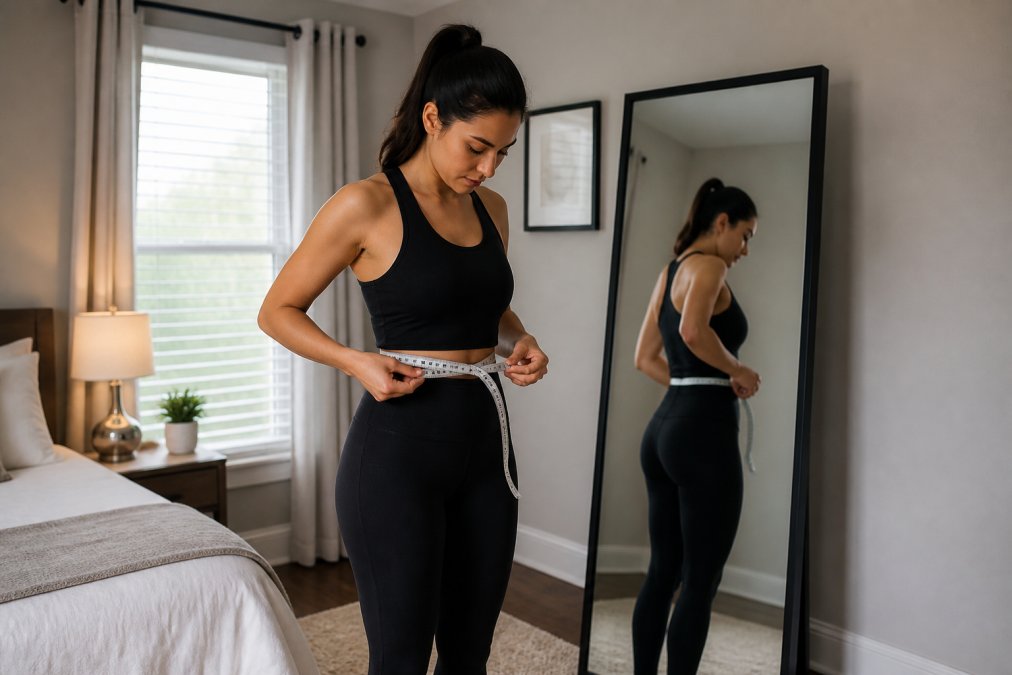
The Five Key Measurements to Take
- Bust or chest: around the fullest part, keeping the tape level across your back
- Natural waist: the narrowest point of your torso, usually just above the navel
- Hips: around the fullest part, roughly 20cm below the waist
- Inseam: from the crotch seam to where you want the hemline to fall
- Shoulder width: from the outer edge of one shoulder seam to the other
Tools and Timing for Accurate Results
A soft tape measure and a mirror are enough. Measure in the morning when you're not bloated, and re-measure every few months since bodies shift with weight, training, and even the season. Write the numbers down and keep them on your phone; guessing is how wardrobes fill up with near-misses.
How to Identify Your Body Shape and Dress for It
Body shape analysis is about proportions, not categories, and it tells you which silhouettes will flatter your natural lines. The goal isn't to hide anything. It's to create balance where your proportions are uneven.
Most people fall into one of a few broad shapes based on waist-to-hip ratio and shoulder width. Here's how to find yours with a tape measure, not a mirror:
- Hourglass: shoulders and hips within 5% of each other, waist at least 25% smaller than both
- Rectangle: shoulders, waist, and hips within 5-10% of each other, with less waist definition
- Inverted triangle: shoulders more than 5% wider than hips
- Triangle (pear): hips more than 5% wider than shoulders
- Apple: waist wider than both shoulders and hips, often with a fuller midsection
These ratios matter because they predict where fabric will pull, gap, or drape awkwardly. If your shoulders are wider than your hips, structured clothing and tapering at the waist restore balance. If your hips are fuller, a defined shoulder line and a hemline that skims rather than clings works better. Torso length matters too: a long torso suits higher rises, while a shorter torso benefits from mid-rise and cropped jackets.
But here's what most guides won't tell you: body shape analysis can trigger anxiety and distorted self-perception. Research in body image psychology shows that people often misjudge their own proportions, seeing themselves as wider or more disproportionate than measurements reveal. If you find yourself obsessing over which category you "should" be, or feeling worse after measuring, step back. The numbers are a tool, not a verdict. Fit is about comfort and ease of movement, not achieving a perfect geometric ratio.
A practical way to bypass the emotional noise: measure your best-fitting garment flat on a table and compare it to your body measurements. The difference tells you exactly how much ease the garment has and whether that ease works for your proportions. This is more reliable than any shape quiz.
The point is fit consistency. When you know your proportions, you stop buying pieces that fight your frame, and you stop blaming your body for a garment's poor design.
Understanding Clothing Size Charts (and Why They Lie)
Size charts describe a brand's ideal customer, not your body, which is why the same measurements land you in different sizes across stores. Fit and size are not the same thing: size is a number on a tag, while fit is how a garment actually sits on your shoulders, waist, and hips.
Vanity Sizing: Why a Medium Isn't Always a Medium
Vanity sizing is the practice of labelling larger garments with smaller numbers so shoppers feel better about their size (peer-reviewed research). Over time, a "medium" has quietly grown, and because there's no enforced standard across the industry, sizing standards guidance from the International Organization for Standardization leaves brands free to define their own charts.
The practical result: ignore the number and check the measurements instead. A brand's own size guide, laid out in centimetres for each fit point, is more reliable than the letter on the label. When shopping online, compare your five measurements against the chart for every category, because a brand's tops and bottoms often run differently.
How to Use a Tailor for Better Fit
A tailor turns a good-enough garment into one that looks made for you, and most alterations cost far less than replacing the item. Ready-to-wear clothing is cut for an average that doesn't exist, so almost everything benefits from small adjustments.
The alterations worth paying for are the ones that change how a garment reads on your frame:
- Hemming: adjusting trouser length and skirt hemlines
- Tapering: taking in the waist or legs for a cleaner line
- Shoulder and armscye work: the hardest alteration, so buy for shoulder fit and adjust elsewhere
- Sleeve length: a quick fix that sharpens any jacket or shirt
Buy for the fit points you can't easily change, especially the shoulder seam, and tailor the rest. Bespoke and made-to-measure go further, but for everyday wear, a good local tailor gets you most of the way.
Fabric, Drape, and Construction: What Labels Don't Tell You
Two garments can share identical measurements and still fit completely differently, because fabric composition and drape decide how clothing moves on your body. This is the part most fit guides ignore entirely.
Structured fabrics hold their shape and create clean lines, which suits straighter silhouettes. Fluid fabrics drape and follow the body, which flatters curves but shows every pull and wrinkle. Fabric tension is the tell: if a garment creases horizontally across the chest or pulls at the buttons, it's too tight regardless of the size on the tag.
Construction details matter just as much. A well-set armscye lets you raise your arms without the whole shirt lifting. A properly matched shoulder seam sits at the edge of your shoulder, not past it. Checking these before you buy saves a return later. The UK Fashion and Textile Association notes that garment construction quality varies widely even within a single price band, so the label alone won't tell you how a piece is made.
For anyone shopping secondhand, this matters even more. Thrifted and vintage pieces often predate modern vanity sizing, so measurements are your only reliable guide.
Building a Wardrobe Where Everything Fits
A wardrobe audit is the fastest way to stop buying clothes that don't fit. Pull everything out, try it on, and sort each piece into three piles: fits well, needs altering, and let go.
The pieces that need altering go to the tailor. The ones that don't work get donated or sold. What's left is your real baseline, and it tells you exactly what's missing.
From there, build around fit consistency: choose a few silhouettes that suit your shape, buy for your hardest-to-fit point, and repeat what works. A style guide, whether it's a personal one you keep or a brand's fit notes, keeps you from re-buying the same mistakes.
But if you shop secondhand or vintage, and more people do every year, the rules change. Thrifted and vintage pieces often predate modern vanity sizing, so a vintage size 12 might fit like a contemporary size 8. Measurements are your only reliable guide. Here's how to navigate it:
- Ignore the tag size entirely. Bring a soft tape measure or use the one many thrift stores keep at the fitting room. Measure the garment flat: pit-to-pit, waist, hip, and length. Compare those numbers to your own measurements plus the ease you prefer.
- Check for shrinkage and stretch. Natural fibers like cotton and wool may have already shrunk from repeated washing. Synthetics may have stretched out. Feel the fabric and look for puckered seams or distorted hems.
- Inspect construction quality. Vintage garments often have wider seam allowances, which means a tailor has more fabric to work with when altering. That's a hidden advantage. But check for dry rot in older fabrics, gently tug a seam to see if it crumbles.
- Know your era. Garments from the 1980s and 1990s tend to have more generous cuts and higher rises. Pieces from the 2000s may run smaller and lower. This helps you predict fit before you try anything on.
For online secondhand shopping, ask sellers for flat measurements and compare them to a garment you already own that fits well. If a seller won't provide measurements, that's a red flag.
The same logic applies to sustainable fashion more broadly: buying fewer, better-fitting pieces and altering them is more sustainable than constantly replacing poorly fitting fast fashion. A tailor extends the life of a garment by years.
This is where a curated shop helps. Sānvivá brings womenswear, menswear, kids wear, underwear, and jewelry together in one place, with pieces vetted for comfort and everyday wearability, so you're not juggling five checkouts to dress the whole family. One customer, J.M Jessica, put it plainly about a wig she ordered: "The wig looked exactly like the photos, color, texture, everything." Fit confidence, across categories, is the whole point.
| Fit Problem | Likely Cause | Fix |
|---|---|---|
| Gaping waistband | Waist-to-hip ratio mismatch | Have the waist taken in |
| Pulling across chest | Fabric tension too high | Size up or choose a stretch blend |
| Shoulders drooping | Shoulder seam too wide | Buy for shoulder fit next time |
| Hemline too long | Inseam not matched | Hem to your measured length |
| Clinging and wrinkles | Wrong drape for your shape | Switch to structured fabric |
Frequently Asked Questions
How do I know if a garment fits me correctly?
A garment fits correctly when the shoulder seam sits at the edge of your shoulder, the fabric doesn't pull across your chest or hips, and you can move comfortably without adjusting. Check the armscye (armhole) for restriction and the hemline for a flattering length. If you need to tug or readjust constantly, the fit is off. Comfort is a reliable signal: if it feels tight in one spot and loose in another, sizing up or down won't fix it. That's when a tailor can adjust specific fit points.
Why do clothes fit differently across different brands?
Brands use their own fit models and grade patterns differently, so a medium at one label can match a small or large at another. Vanity sizing makes this worse: some brands label larger garments with smaller sizes to flatter shoppers. Fabric composition also changes how a garment drapes and stretches. Always check that brand's specific size chart and measure yourself before ordering. If you're between sizes, go with the measurement that matches your largest fit point and plan for alterations.
What is the 3-3-3 rule for clothes?
The 3-3-3 rule is a wardrobe guideline suggesting you keep three outfits for everyday wear, three for work or formal settings, and three for special occasions. The idea is to build a small, versatile rotation where every piece fits well and works together. It's not a strict rule, but it helps you focus on quality over quantity. When every item in your closet fits properly, getting dressed takes less time and you're less likely to keep clothes that don't serve you.
How can I find clothes that fit my body without spending a fortune?
Start by measuring yourself accurately and noting your key fit points: shoulder, bust or chest, waist, hips, and inseam. Use those numbers to check size charts before buying. Focus on fabrics with some stretch or adjustable features like drawstrings and elastic waists. A tailor can alter off-the-rack pieces for a custom fit at a fraction of bespoke prices. For families shopping across multiple sizes, a curated retailer like Sānvivá simplifies the process by offering vetted pieces across womenswear, menswear, and kids wear in one place.